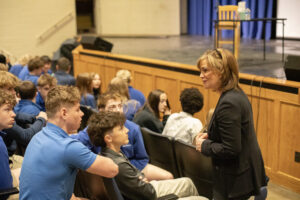
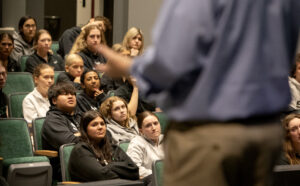
Week of Understanding is an annual educational initiative created by the Institute for Holocaust Education and the Omaha Public Schools. The week is designed to deliver Holocaust survivor testimony to a maximum number of students in one school week. During the week of March 22-26th, 2027, we will have second generation (2G), and third generation (3G) speakers for schools across Nebraska and parts of Iowa. This program was made possible through the support of the Shirley & Leonard Goldstein Foundation, Omaha Public Schools Foundations and the Jewish Federation of Omaha.
To maximize the impact of these presentations, participating schools are encouraged to arrange for the largest audience possible. Consider combining classes or grade levels and, if appropriate, inviting students from neighboring schools. Presentations work best when 90 minutes can be scheduled, allowing speakers 60–70 minutes to share their family’s story and time for student questions and discussion.
Send us an email and a member of our staff will be in touch.
Register for Week of Understanding
Complete the form above, and a member of our team will be in touch to discuss availability and next steps.
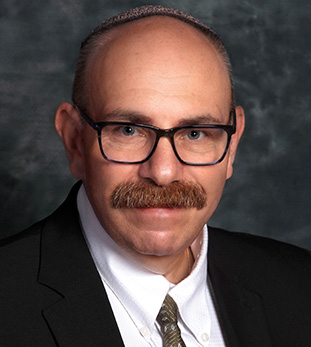
“My mother and I slept together in a bed that was inside a closet. I remember lying in that bed trembling in fear at times.”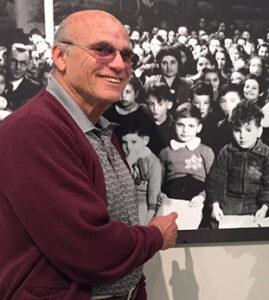
Peter was born in Amsterdam in 1935. In 1942, when Peter was 7, the Nazis seized Peter’s entire family except for Peter and his mother. Peter’s mother contacted the Dutch Underground for help. The Underground found Klaas and Roefina Post who agreed to shelter Peter and his mother on their small farm in northern Holland, putting their own lives at risk. For two years they lived with the Posts, until it became too dangerous and they found another hiding place with two women in The Hague. Peter, his mother, and his aunt were the only survivors of his family. Klaas and Roefina Post have been recognized as Righteous Among the Nations by Yad Vashem.
After the war, Peter and his mother immigrated to the United States in 1949, arriving in New York. Peter was 13 and didn’t speak any English, but was placed in the 8th grade. Peter had a long career as a radiology technologist. He moved to Seattle in 1997 and continues to be an active member of the Holocaust Center for Humanity’s Speakers Bureau.
“I recognize that we who survived the Holocaust have a responsibility to tell our stories to give hope to the slogan, ‘Never Again.’”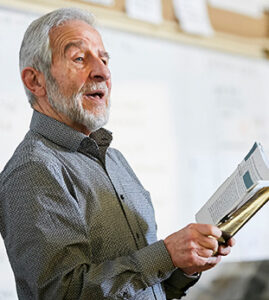
George Elbaum was born in Warsaw, Poland on August 20, 1938, one year before Hitler invaded Poland and spurred the outbreak of World War II. Within weeks, George’s father was called to serve in the army and never returned. Acutely aware of the danger she and her son were in, George’s mom dyed her hair blonde and purchased the identification documents of a Catholic woman who had died. In 1942, she smuggled George out of the Warsaw Ghetto before paying various Polish Catholic families to hide and raise him. In 1945, George was reunited with his mother, the only other surviving member of his family. They immigrated to America in 1949. For 60 years, George was reluctant to share his story with anyone. He worked towards an engineering career, earning an undergraduate degree, two Master’s Degrees, and a Ph.D. from the Massachusetts Institute of Technology. In 2009, upon viewing “Paper Clips,” a documentary chronicling a Tennessee middle school’s unique attempt to honor Holocaust victims, George was moved to share his story with the world. He and his wife Mimi Jensen live in San Francisco, but George makes frequent trips to Seattle to visit his children and grandchildren. George is a member of the Holocaust Center’s Speakers Bureau.
“My hope is that through sharing my story, I can personally talk about the horrors of the Holocaust to remind this generation of the dangers of hatred, prejudice and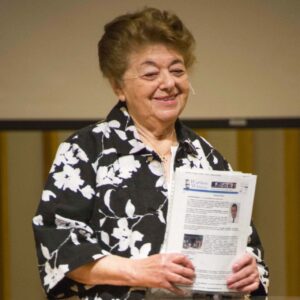 discrimination.”
Born in Miskolc, Hungary, in 1927, Magda survived the Holocaust after being deported with her family to Auschwitz-Birkenau on her 17th birthday. Following liberation, she discovered that only six members of her extended family of 70 had survived. Dedicated to preserving the memory of the Holocaust, Magda shared her testimony with more than 100,000 students and community members, believing that personal stories are essential to combating hatred, denial, and indifference.
Magda passed away July 7, 2020 at the age of 93.
“It was all bits and pieces…after a while, things kind of merge and run together and it’s hard to tell what is factual, what’s a memory and what’s a nightmare.”
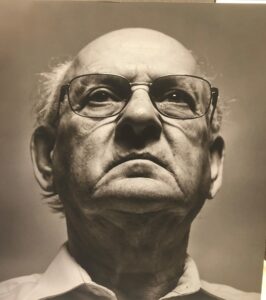
For more than five decades, Fred Kader lived with unanswered questions about how he survived the Holocaust. Born in Belgium to Polish Jewish parents, he was only four years old when his family was torn apart during the Nazi occupation. His father was deported to Auschwitz, where he was murdered. At a train station in Antwerp, Fred’s mother made the heartbreaking decision to tell her young son to walk away, hoping his blond hair and blue eyes would help him escape. He never saw her again.
Fred survived as one of Belgium’s hidden children, rescued by courageous individuals who risked their lives to protect Jewish children. He was hidden in safe houses, narrowly escaped deportation to Auschwitz, and was ultimately placed in the care of Marie Albert Blum, a nurse who operated a shelter within Belgium’s underground rescue network. After the war, an uncle found him and raised him, but Fred remembered little of how he had survived.
Dr. Kader passed away on June 19, 2024.
“The question became who would kill us first – the bombs or the Nazis?”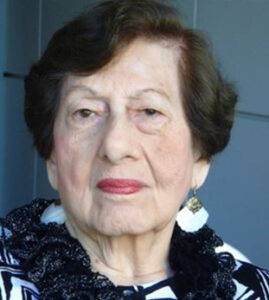
Born in Budapest, Hungary on July 24th, 1933, Agnes grew up during the Second World War. When the Germans invaded Hungary in March 1944, deportations began in the rural areas. In November of 1944, a group of Nazi officers came to their building and ordered all men between the ages of 18 and 45 to lineup outside. Her father was taken away. Later in the month, the Nazis repeated the act and seized all women within that same age group. The family’s former maid, Julia Balazs, took 11 year old Agnes in as her “niece.” Agnes changed her last name, learned the Rosary and passed herself off as a Christian. During months of Allied bombings, Agnes had to hide in an underground bunker. In January 1947, reunited, Agnes and her father left for Chicago. Agnes still lives in the Chicago area, where she is an active volunteer with the Illinois Holocaust Museum. Her memoir, “A Roll of the Dice,” was published in 2011.
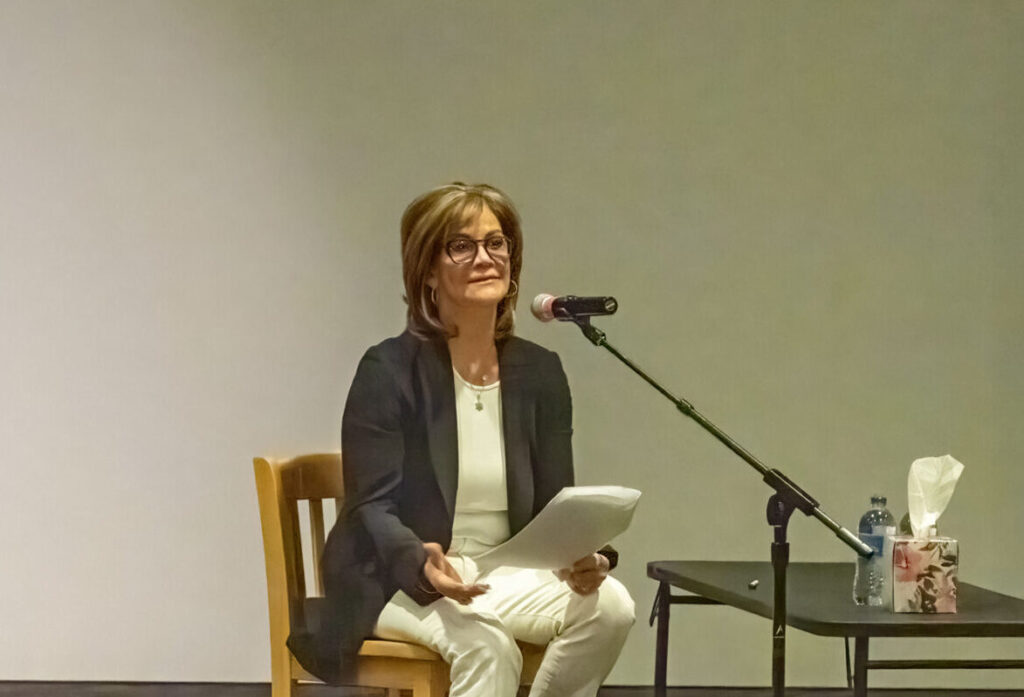
Hazzan Michael Krausman has served as a Hazzan for over 25 years. He is currently the Hazzan at Beth El Synagogue in Omaha, NE and is a Certified Holocaust Educator with the Echoes and Reflections Curriculum. Hazzan Krausman is a second generation Holocaust Survivor. His father, Henry Krausman was born in Zawierce, Poland in
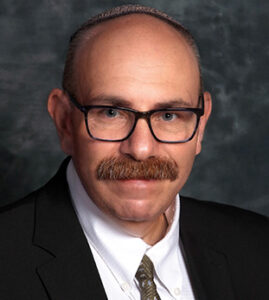
1927. During the Nazi invasion, Henry was made to live in a ghetto where he was put into forced labor under deplorable working conditions and was subject to severe beatings. He was deported to a series of concentration camps including Gros Rosen and Buchenwald. Henry escaped during a death march by hiding with others in the barn of a German farm.
Jim Berk shares the remarkable story of his mother, Ilona Dorenter Berk (1929–2024), a Holocaust survivor who endured five Nazi concentration camps before immigrating
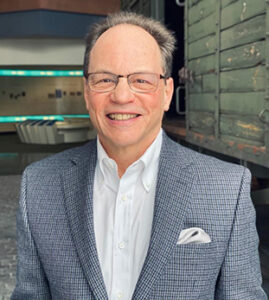
to the United States in 1948. A native of Czechoslovakia, Ilona settled in Lincoln, Nebraska, where she built a successful dressmaking career and a new life after the war. Through her story of resilience, courage, and hope, Jim honors her legacy and reminds audiences of the importance of remembering the Holocaust.
Her son, Jim, a former tv & radio sportscaster now living in the Detroit area, tells her remarkable story in a poignant, powerful presentation.
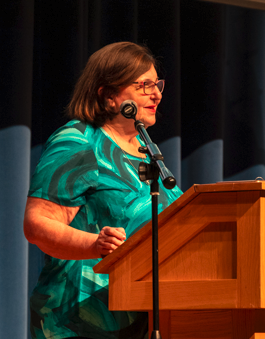
Sarah is an Omaha native and an Omaha Central graduate. She is currently a graduate student at Case Western Reserve University working toward her master’s degree in
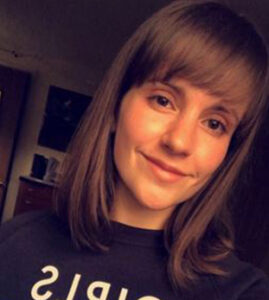
social work. Her goal is to be a counselor for trauma survivors. We are thrilled that she has become part of our Speakers’ Bureau and will continue to share the story of her grandmother, Bea Karp. Bea was a pioneer in Holocaust survivor testimony. Before many survivors were able to speak of their experience, and before many people thought they were ready to hear it, Bea spoke – for over 40 years she told her story.
After more than 20 years as a high school history teacher, Steve Goldberg is taking time to share a powerful story, one rooted in friendship, memory, and a promise.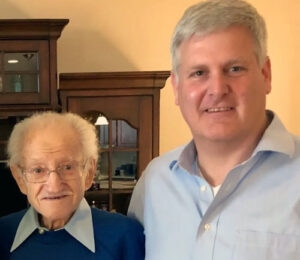
In November 2018, Steve met Abe Piasek, a Holocaust survivor from Poland, when Abe spoke at the school where Steve was teaching in Durham, N.C. What began as a classroom visit became a meaningful friendship. Abe passed away in 2020 at the age of 91. Just three days before he died, he made a simple but profound request to Steve: “Keep telling my story.”
Steve has honored that promise.
Through his presentation, “My Friend Abe,” Steve shares Abe’s experiences during the Holocaust, the resilience that carried him through unimaginable hardship, and the lessons his life leaves for all of us today.
So far, Steve has shared Abe’s story more than 150 times, reaching nearly 9,000 people—ensuring that Abe’s voice, courage, and message live on.
Learn More About My Friend Abe
Still have questions? Contact info@ihene.org and one of our staff members will be in touch.