Guidelines for Hosting a Second or Third-Generation Holocaust Speaker

One of the most meaningful ways to understand the impact of the Holocaust is through the personal stories shared by the children and grandchildren of survivors. Second-generation (2G) and third-generation (3G) speakers carry forward their families’ experiences, helping audiences connect personally with the history of the Holocaust while exploring its lasting impact across generations.

The Institute for Holocaust Education’s Speaker’s Bureau coordinates presentations by second and third-generation speakers for schools, universities, community organizations, and other audiences throughout Nebraska and western Iowa. These presentations complement Holocaust education by illustrating how the trauma, resilience, and lessons of the Holocaust continue to shape families, identities, and communities today.

Request a Speaker

To request a speaker, please complete the Speaker Request Form below and a member of our team will be in touch to discuss availability and next steps.

Request a Speaker

When submitting your request, please:
  • Suggest three possible dates and times for the presentation.
  • Allow approximately 60 – 75 minutes for the presentation and an additional 10 – 15 minutes for audience questions.
  • Include the age or grade level of your audience, anticipated audience size, and their level of Holocaust knowledge.
  • Provide both school and personal contact information in case schedule changes become necessary.
  • If you would like to record the presentation, please request permission when submitting your speaker request.


Guidelines for Hosting a Speaker

Preparing for Your Speaker's Visit

Welcoming a speaker into your school or organization with thoughtful planning and professionalism helps create a respectful and comfortable environment. Careful attention to logistics and hospitality allows the speaker to focus on sharing their family’s history and educational message.

Please consider the following:

  • Provide clear parking instructions, entrance information, and accessibility details, including stairs or elevators if applicable.
  • Whenever possible, schedule arrival and departure outside of heavy traffic or student dismissal times.
  • Have a student or staff member greet and escort the speaker to the presentation space.
  • Offer access to a restroom before the program begins.
  • Provide a microphone, chair (if desired), glass of water, and tissues.

Educator Preparation

  • Contact IHE well in advance to schedule your presentation.
  • Prepare students with age-appropriate background knowledge about the Holocaust before the presentation.
  • Introduce the speaker and know the correct pronunciation of the speaker’s name.
  • If the speaker’s family history includes specific events, such as ghettos, concentration camps, hiding, or liberation, provide students with historical context beforehand.
  • Minimize interruptions during the presentation by limiting announcements and unnecessary movement.
  • Ask students to remain in the room throughout the presentation.
  • Stay nearby to help facilitate questions or clarify audience comments when needed.
  • Give your full attention to the speaker throughout the program.

Student Preparation

Students will gain the most from the experience when they arrive prepared to listen thoughtfully.

Before the presentation:

  • Provide students with background information about the Holocaust and the speaker’s family lived experience when available.
  • Explain that speakers may discuss difficult or emotional topics.
  • Review respectful listening expectations.
  • Discuss appropriate questions and encourage students to ask thoughtful, respectful questions.
  • Invite students to share potential questions with you beforehand if they are unsure whether a question is appropriate.
  • Reinforce expectations for audience behavior, including attentive listening, remaining seated, and participating respectfully during the Q&A session.

After the Presentation

  • Thank the speaker for sharing their family’s lived experience.
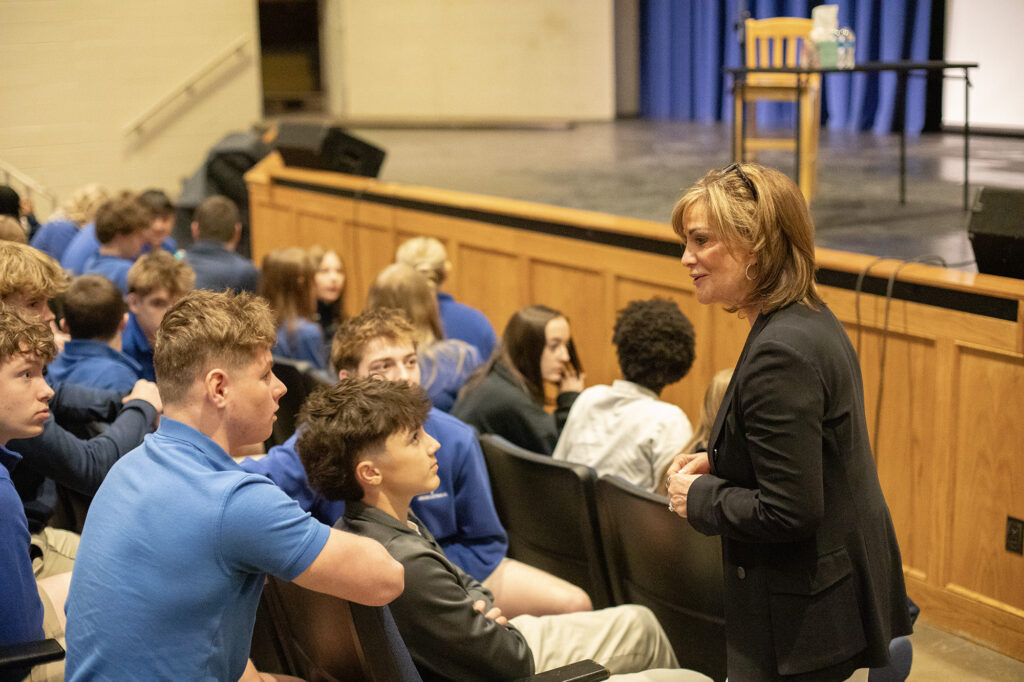
  • If the speaker is comfortable doing so, allow time for students or audience members to meet them individually and take photographs.
  • Escort the speaker back to the building entrance or their vehicle.
  • Provide time later in the day or during the next class to reflect on the presentation and discuss what students learned.
  • Encourage students to write thank-you notes. Consider having students write in small groups so the speaker receives a manageable number of thoughtful messages.

Why These Stories Matter

As the generation of Holocaust survivors becomes smaller, the responsibility of preserving their stories increasingly passes to their children and grandchildren. Second and third-generation speakers help ensure that the voices of survivors continue to educate future generations, combat antisemitism and Holocaust distortion, and inspire audiences to stand against hatred, prejudice, and indifference.

To request a speaker, please complete the Speaker Request Form below and a member of our team will be in touch to discuss availability and next steps.


Request a Speaker